“The supplier is already selected. Please negotiate the best price.”
The negotiation is already over.
Shadow spend does not start with hidden invoices. It starts when decisions are made outside the commercial control system.
Where control is lost?
Shadow spend procurement problems appear when supplier choice, scope, and preference are formed before commercial challenge is applied.
In procurement-led environments, leverage exists before the supplier is chosen. Shadow spend removes that stage entirely. The pattern is consistent:
Suppliers are pre-selected: Business functions choose vendors before any commercial challenge is applied.
Scope is fixed in isolation: Requirements are defined without cost, alternatives, or necessity being tested.
Procurement enters too late: Asked to “negotiate” after the outcome is already shaped.
The supplier knows they have won: Competition is absent. Price becomes a formality.
The negotiation becomes administrative: Terms are adjusted. Value is not.
Procurement does not lose control here. It is excluded from it. You have seen this. The request is framed as negotiation. The structure makes it impossible.
What it costs?
This is not a process gap. It is a structural P&L issue.
- No commercial leverage: Prices are accepted, not tested against the market.
- Unchallenged supplier margin: No tension is introduced before selection.
- Contractual exposure: Terms are signed without proper commercial, legal, or risk control.
- Fragmented volume: Spend is split across suppliers, removing scale advantage.
- Repeated inefficiency: Each function negotiates separately, without shared intelligence.
- Permanent price inflation: Baseline pricing resets at a higher level for future negotiations.
Once the supplier is selected and the scope is fixed, the negotiation cannot recover lost leverage.
What must be installed?
Shadow spend is not solved with rules. It is solved with upstream control.
- Procurement enters before the supplier is named: Control begins when the business problem is defined, not when a contract is ready.
- Scope is challenged, not accepted: Need, specification, and delivery model are tested before pricing.
- Competition is introduced early: Suppliers are evaluated before preference becomes commitment.
- Commercial ownership is clear: No function commits spend without defined authority.
- Process enables speed, not avoidance: If sourcing is bypassed, the system is too slow or too late.
This shifts procurement from end-stage negotiation to decision control.
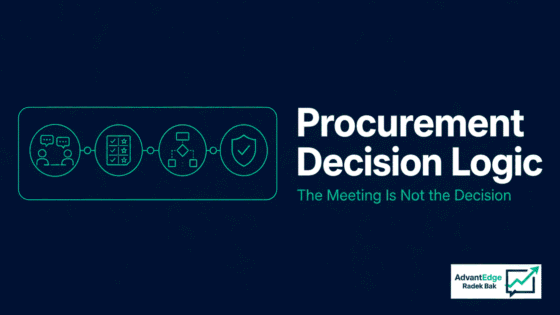
Relevant Negotiation Surgery™ entry point: How Procurement Decides™
Use the Control Gap Diagnostic to identify whether deals in your organization are being shaped before procurement enters.