The deal looks committed. It stalls at signature.
A new requirement appears. A new stakeholder intervenes.
The problem is not the negotiation. The problem is that you never saw the deal.
Where control is lost?
In complex B2B decisions, outcomes are not driven by relationships. They are driven by structure. Stakeholders do not share the same objective:
- Operations protects continuity.
- Procurement protects cost and contract discipline.
- Finance protects cash and return.
- Legal protects liability, contractual risk, and enforceability.
If you engage only one of them, you are not in control of the deal. The pattern is consistent:
A single contact defines the reality: The team builds the solution around one perspective.
Hidden stakeholders remain unmapped: Finance, procurement, or legal enter late with different priorities.
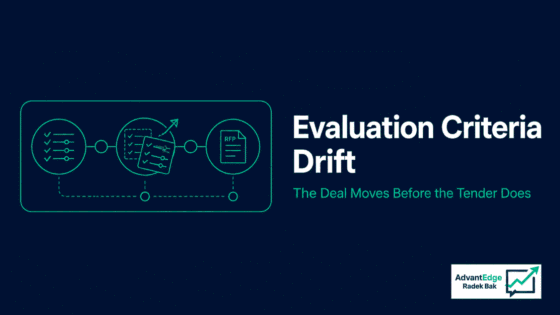
The decision logic shifts: What mattered early is no longer what is being evaluated.
New requirements appear after price is anchored: Terms, liabilities, and obligations are introduced too late to price properly.
The team reacts with concessions: To close the deal, value is traded against unknown constraints.
You have seen this. The deal did not fail suddenly. It revealed a structure you never mapped.
What it costs?
This is not a pipeline issue. It is a control failure.
- False commitment signals: Deals are forecast as secure without full decision visibility.
- Late-stage pressure: New stakeholders force changes after pricing is fixed.
- Unpriced obligations: Terms and requirements increase cost to serve.
- Concession cascades: Margin is traded to unlock approval.
- Profitability erosion after signature: Revenue is booked. Value is lost in execution.
Once the structure appears late, negotiation becomes recovery, not control.
What must be installed?
Deals must be mapped before they are priced.
- Stakeholder control replaces relationship reliance: Every decision role is identified, not assumed.
- Each role is understood by what it protects: Cash, risk, uptime, cost, compliance. Not job title.
- Veto paths are confirmed early: If you cannot name who can block the deal, you cannot price it.
- Proposals reflect multiple decision logics: Value is positioned for each controlling function, not only the user.
- No proposal without structural visibility: If the map is incomplete, the offer is not final.
This shifts the team from negotiating with individuals to controlling the decision system.
Relevant Negotiation Surgery™ entry point: How Procurement Decides™
Use the Control Gap Diagnostic to identify whether hidden stakeholders are shaping your deals.