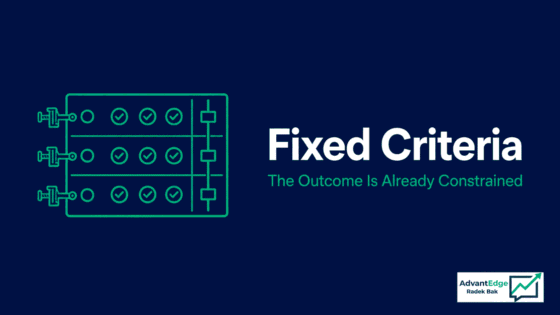
The RFP lands. The outcome is already constrained.
You respond, present, negotiate. The margin still disappears.
The loss did not happen at the table. It happened before you were invited.
Where control is lost?
In procurement-led decisions, the deal is shaped upstream. Before the RFP is issued:
- Criteria are defined.
- Stakeholders form a shared view.
- Alternatives are tested.
- A price corridor begins to form.
By the time the document reaches you, the system is already built. The pattern is consistent:
Differentiation is not embedded: If your strengths are not translated into requirements, they are not evaluated.
Scoring logic is fixed: If price is heavily weighted, premium becomes irrational inside the model.
A baseline is set: A low-cost reference anchors the comparison.
Access is restricted: Contact rules limit your ability to influence or gather intelligence.
The narrative is reduced: Your value is forced into predefined templates and fields.
At the table, you are not shaping the decision. You are being measured against it. You have seen this. The discussion stays on price because the system was built that way.
What it costs?
This is not a negotiation issue. It is a structural loss.
- Price becomes the dominant lever: Because value is not weighted or recognized.
- Leverage is lost early: Because alternatives and benchmarks are already defined.
- Concessions become necessary: To fit within the buyer’s model.
- Wins become unprofitable: Volume is secured. Margin is sacrificed.
- Future negotiations degrade: Each deal resets the baseline lower.
Once the architecture is fixed, margin cannot be negotiated back into the deal.
What must be installed?
Control must exist before the RFP is written.
- Entry happens before formal process: If engagement starts at RFP, control is already limited.
- Criteria are influenced, not accepted: Differentiation must appear in mandatory requirements or heavily weighted factors.
- Stakeholder access is secured early: Technical users and economic owners are engaged before procurement controls the process.
- The problem is defined, not received: You shape how the need is understood before solutions are compared.
- Bid decisions are controlled: Not every RFP is a negotiation opportunity. Some are pre-defined outcomes.
This shifts the team from reacting to evaluation systems to influencing how they are built.
Relevant Negotiation Surgery™ entry point: How Procurement Decides™
Use the Control Gap Diagnostic to identify whether your deals are being shaped before you enter the process.