“The criteria are fixed. Bid compliant.”
At that point, the negotiation is no longer open. It is being processed.
The issue is not that criteria cannot change. It is that they hardened before you arrived.
Where control is lost?
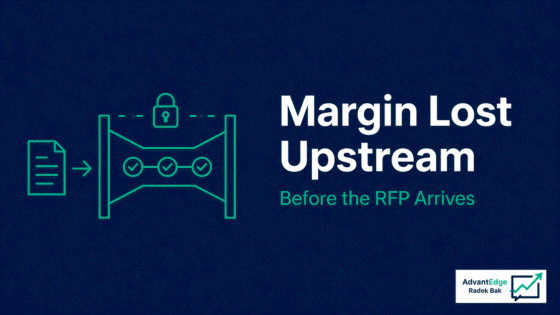
In procurement-led tenders, evaluation logic is built upstream.
Procurement evaluation criteria often turn commercial value into a scoring structure before the supplier has a real opportunity to influence the decision.
Before the RFP is issued:
- Requirements are translated into measurable criteria.
- Some are written as gates, not preferences.
- Scoring logic is structured for comparability and governance.
By the time the document reaches you, the system is already defined. The pattern is consistent:
Requirements reflect internal assumptions: What the organisation already does becomes the definition of “quality”.
Gates are embedded early: Certain conditions must be met to remain in the process.
Differentiation does not fit the model: If value cannot be scored, it is not counted.
Alternatives are rejected as non-compliant: Not because they are worse, but because they do not match the structure.
Change becomes costly: Reopening criteria requires internal rework, re-issue, and justification.
Procurement is not protecting the criteria because they are correct. It is protecting the process because it is auditable. You have seen this. Your solution delivers a better outcome. The model cannot recognize it.
What it costs?
This is not a negotiation issue. It is a structural constraint.
- Price becomes the only adjustable variable: Because value is not reflected in the scoring logic.
- Free value is given away: Unscored differentiation becomes uncompensated delivery.
- Leverage is removed early: Because the evaluation system defines what matters.
- Concessions replace positioning: To recover points that cannot be earned structurally.
- Wins become unprofitable: The deal fits the scorecard, not the cost to serve.
Once the criteria are fixed, margin cannot be negotiated back into the deal.
What must be installed?
Control must exist before criteria harden.
- Engagement happens before the RFP: If you enter at release, you are inside a closed system.
- Criteria are influenced, not accepted: Differentiation must be translated into mandatory or heavily weighted factors.
- Gate conditions are identified early: If a requirement excludes your model, it must be addressed before formalization.
- Authors of requirements are known: Each critical criterion has an owner, not just a description.
- Bid decisions are controlled: Not every compliant RFP is a viable commercial opportunity.
This shifts the team from reacting to scorecards to influencing how they are built.
Relevant Negotiation Surgery™ entry point: How Procurement Decides™
Use the Control Gap Diagnostic to identify whether your team is entering deals after the evaluation logic has hardened.