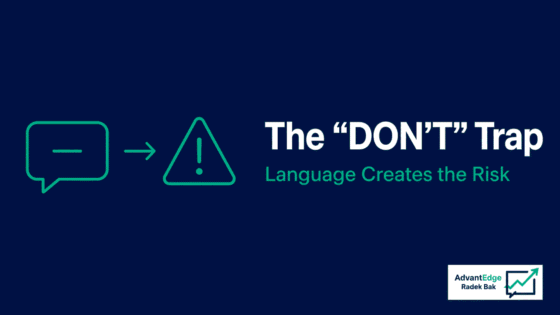
“I understand your position, but we cannot accept the price.”
The negotiation just slowed down.
Procurement does not hear balance. It hears rejection. The conversation shifts from evaluation to defense.
This is not a language detail. It is a control issue.
Where control is lost?
In procurement-led negotiations, language is interpreted as position, not intention. In procurement negotiation language, the word “but” creates immediate opposition:
Validation is cancelled: The first statement is ignored. Only the rejection remains.
Defensive posture is triggered: The counterparty stops evaluating and starts preparing a response.
Information flow stops: Data sharing is replaced by argument.
Positions harden: The conversation moves from exploration to contradiction.
Procurement uses this shift. Once the interaction becomes oppositional, pressure increases. Options narrow. Movement slows.
You have seen this. The discussion moved from progress to resistance without a clear trigger.
What it costs?
This is not a communication issue. It is a control failure.
- Negotiation velocity drops as the discussion turns into argument.
- Access to information declines when the counterparty stops sharing.
- Positions become rigid instead of adjustable.
- Scope discussions stall because alternatives are no longer explored.
- Leverage weakens as the conversation becomes reactive.
Once resistance is triggered, recovery takes time. Momentum is lost.
What must be installed?
Language must be treated as a controlled lever in the negotiation.
- Opposition is avoided unless required: Rejecting a position is a deliberate act, not a default phrasing.
- Multiple realities are held in the same statement: Constraints are acknowledged without cancelling each other.
- The conversation is directed, not contested: The objective is movement, not correction.
- Information flow is protected: Responses are structured to keep the counterparty engaged.
- Language supports structure: Statements are designed for how they will be received inside the buyer’s system.
This shifts communication from reaction to controlled progression.
Relevant Negotiation Surgery™ entry point: Behind the Curtain™
Use the Control Gap Diagnostic to identify whether communication patterns are slowing or weakening your negotiation control.