The Infinity Model: Why the Strategic Negotiation Process Never Ends
When most people think of negotiation, they picture a meeting at a table, facing the “other party.” Yes, that moment matters – but it is only one part of a much larger cycle.
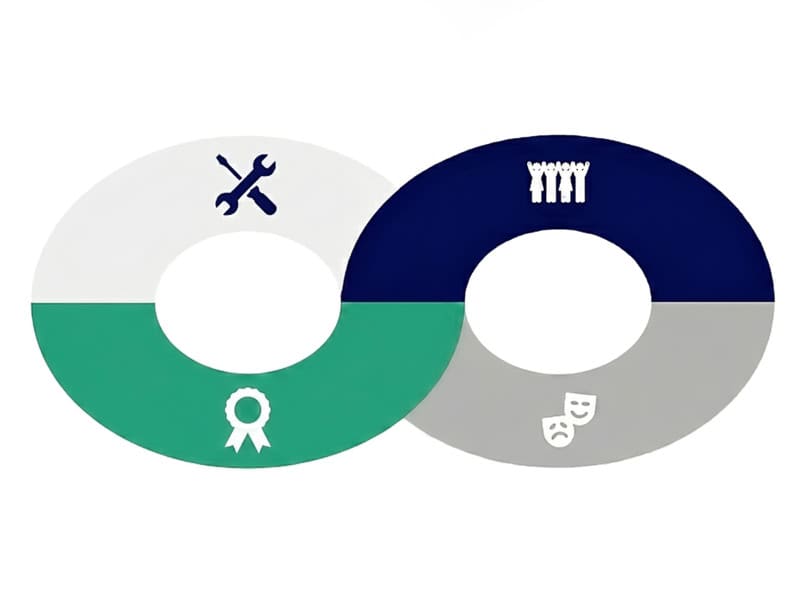
Negotiation is a process, not an event. And like a well-produced theatre performance, the strategic negotiation process unfolds through several distinct phases. To make this intuitive, let’s map the process to the world of theatre: The Infinity Model.
Phase 1: Stagecraft (Preparation)
Just as a production succeeds or fails in rehearsal, negotiations are won or lost long before anyone enters the meeting room. This is where research is conducted, strategies are designed, scenarios are rehearsed, and roles are assigned.
Strong Stagecraft ensures that the strategic negotiation process runs with direction, confidence, and purpose.
Phase 2: Live Performance (Meeting)
The curtain rises. Actors step into their roles, each line – arguments, counterarguments, concessions – shaping the momentum of the scene. Delivery, timing, and emotional control matter as much as the content itself. This is where preparation meets execution.
Phase 3: Curtain Call (Conclusion)
The story reaches its final act. Positions converge, agreements are finalized, and the outcome is revealed – sometimes a clear victory, sometimes a compromise, always an opportunity to learn. The curtain call marks closure, but not the end of the strategic negotiation process.
Phase 4: Awards Gala (Celebration)
After every performance comes recognition. Teams debrief, assess what worked and what didn’t, celebrate achievements, and distill lessons. This reflection builds capability and strengthens the foundation for future negotiations.
Why the Cycle Never Ends
Depending on the negotiation, the interaction may be a one-off (e.g., booking a trip with an agency you’ll never use again) or a recurring one. In business, however, recurring negotiations are by far the norm.
That is why the strategic negotiation process has an infinite, cyclical shape: The end of one negotiation – its agreements, learnings, and relationship dynamics – almost always becomes the starting point of the next round. Think contract renewals, new product introductions, expanded service scopes, or adding new regions.
The cycle also reflects the relationship built between the parties. A constructive relationship makes future negotiation rounds smoother, while a strained one can make the next “act” far more difficult.
Why Stagecraft Matters Most
In theatre, brilliant performances are never accidental. They are the result of countless hours of rehearsal, script refinement, and stage design.
Negotiation is no different. Stagecraft is the decisive phase of the entire strategic negotiation process.
The lion’s share of the outcome is shaped before the meeting begins. Preparation defines objectives, alternatives, concessions, and the narrative arc. It equips negotiators with clarity, confidence, and the ability to navigate plot twists.
Without strong Stagecraft, even the most skilled actors will struggle. With it, the live performance flows naturally, the conclusion is constructive, and the celebration is well deserved.
In short: The negotiation table does not create success – it merely reveals the quality of the work done backstage.
Key Takeaways for Leaders
To transform your team’s results, keep these three principles of the strategic negotiation process in mind:
Review is vital: Skipping the debrief phase guarantees you will repeat past mistakes in the next round.
Negotiation is continuous: It is never just a single meeting, but a recurring cycle of interactions.
Preparation is king: The quality of your “Stagecraft” determines the outcome far more than the live performance at the table.
Does your team treat negotiation as a one-off event or a continuous strategy? My training programs help organizations master every phase of the strategic negotiation process – from Stagecraft to the Awards Gala. Let’s talk about your team’s development.