Choosing the Right Negotiation “Character”: Why Personality Adaptation Matters
Understanding negotiation archetypes is the key to mastering the two forces present in every deal: your natural style and the style the situation actually requires.
Most people enter a discussion using the former – what feels comfortable – rather than the latter – what is strategically effective.
And this is where negotiations begin to go off-track.
Understanding and intentionally shifting your negotiation posture is one of the most powerful yet underutilised skills in the field. It is not manipulation, nor is it inauthentic. It is simply Tactical Empathy combined with Strategic Versatility.
Why Personality Matters in Negotiation
Popular models such as the Myers–Briggs Type Indicator (MBTI) can help us understand our natural tendencies – how we take in information, how we make decisions, and how we operate under pressure.
But many practitioners find the 16-type system too complex to apply in real time.
Think of MBTI not as a rigid box, but as a set of helpful signposts.
It is like choosing the right outfit for an occasion – you don’t need to understand the entire fashion industry, just what suits the moment.
It does not have to be complicated; just thoughtful.
If you prefer something simpler, behavioural expert Thomas Erikson offers a four-colour model in Surrounded by Idiots:
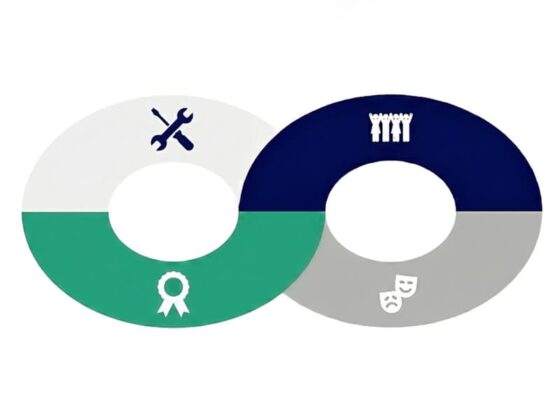
- Red (“Dominant”) – decisive, assertive, goal-oriented
- Blue (“Distanced”) – analytical, structured, detail-focused
- Yellow (“Inspiring”) – enthusiastic, persuasive, visionary
- Green (“Stable”) – patient, supportive, relationship-driven
This model is easier to apply, especially in fast-moving negotiations.
But even here – four colours can still feel like too many options.
So let’s make it even simpler.
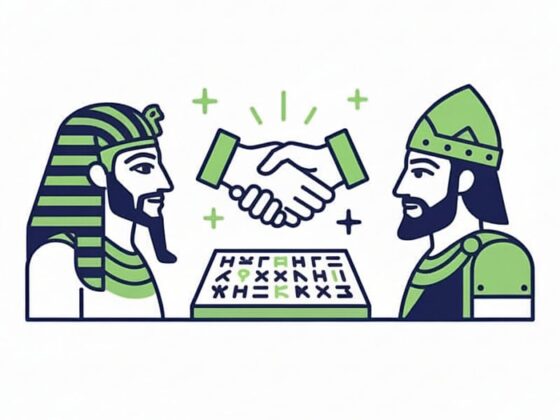
The Two Negotiation Archetypes: Warrior vs. Diplomat
Beneath all the models, assessments, colours and letters, most negotiation behaviours stem from two fundamental archetypes:
1. The Warrior
Confrontational posture
Focused on winning, asserting, claiming value, and pushing the discussion forward.
Stands firm. Moves fast. Protects their interests.
2. The Diplomat
Cooperative posture
Focused on building rapport, creating value, understanding motives, and maintaining relationships.
Slows things down. Builds bridges. Looks for mutual gain.
This distinction is not moral – Warrior vs. Diplomat is not good vs. bad.
Both styles are legitimate and necessary.
The Best Negotiators Are Not One Type – They Are Both
The biggest misconception in negotiation is that people belong to one style forever.
That is not how top performers operate.
Elite negotiators:
- choose the style that suits the context,
- adapt based on the counterpart’s behaviour,
- shift posture when the deal dynamics change,
- and use versatility as a strategic weapon.
They know when to be a Warrior – clear, firm, unshakeable.
They know when to be a Diplomat – patient, curious, collaborative.
And most importantly: they know when to switch between the two.
This is what turns a negotiation from reactive to purposeful.
Why Choosing the Right “Character” Matters
Your initial posture sets the tone for everything that follows:
- atmosphere of the discussion
- intensity of the tactics
- speed of decision-making
- willingness to share information
- depth of relationship
- and ultimately the type of outcome you achieve
A mismatch in style can quietly sabotage the negotiation long before the numbers are even discussed. For example:
- Using competitive, Warrior-style aggression when the counterpart expects long-term partnership?
→ trust collapses, options shrink. - Taking a soft, accommodating Diplomat posture during a crisis that requires firmness?
→ value erodes, credibility suffers.
Negotiation is not theatre, but it is performance – deliberate, purposeful, and strategic.
From Passive Participant to Director
Once you understand the two archetypes, you stop reacting.
You start directing the negotiation:
- Choosing the style intentionally
- Matching it to your goals
- Aligning it with the context
- Adapting when the “plot” changes
This is not about being inauthentic.
It is about being effective.
It is the same principle as selecting the right tool for the job:
a hammer is not better than a screwdriver – they simply excel at different tasks.
Final Thought
Whether you prefer MBTI, the four-colour model, or a two-style framework, the goal is the same: awareness and adaptability.
The negotiators who succeed are those who can look at the interaction, recognise what the situation calls for, and consciously choose the right “character” to play – not because they are pretending, but because they understand the psychology and dynamics of influence.
Negotiation is ultimately a conversation between humans.
The more you understand yourself – and your counterpart – the more control you gain over the outcome.
My training programs are designed to equip leadership teams with strategic versatility, teaching them not just to react, but to consciously choose between the “Warrior” and “Diplomat” archetypes for maximum impact. Let’s talk about upgrading your team’s negotiation agility.