In high-stakes negotiation, self-awareness is not a soft skill. It is a defense mechanism.
Most negotiators bleed value not because they lack market data, but because they lose control of their own reactions under pressure. Your cognitive profile dictates how you process risk, how you handle conflict, and whether you trade margin for emotional comfort.
If you do not know your own “default settings,” you cannot control the room. Worse, a skilled counterparty will profile you, identify your blind spots, and exploit them.
The Diagnostic Protocol
This is not a “quiz” for your amusement. It is a rapid diagnostic tool designed to isolate your core cognitive preferences across four tactical dichotomies:
- Energy Source: Introversion vs. Extraversion (How you recharge).
- Information Intake: Sensing vs. Intuition (Details vs. Big Picture).
- Decision Basis: Thinking vs. Feeling (Logic vs. Values).
- Execution Style: Judging vs. Perceiving (Planning vs. Improvising).
Why Conduct This Audit?
I use this framework to help clients:
Calibrate Your Approach: Adapt your style to neutralise the opponent’s leverage.
Identify Tactical Blind Spots: Recognise where your natural instincts may sabotage a deal (e.g., a “Feeler” conceding too early to preserve a relationship).
Predict Counterparty Behaviour: Learn to read the signals across the table.
Results

Independent, innovative, and logical, you approach life with a complex, long-term plan. You excel at seeing possibilities and organizing theories to achieve goals with high efficiency.

Analytical and objective, you possess a thirst for knowledge and complex, abstract ideas. You are driven by intellectual curiosity and enjoy solving intricate problems.

Assertive and charismatic, you are a natural leader, driven to organize and execute large-scale projects. You confidently push systems forward and demand competence.
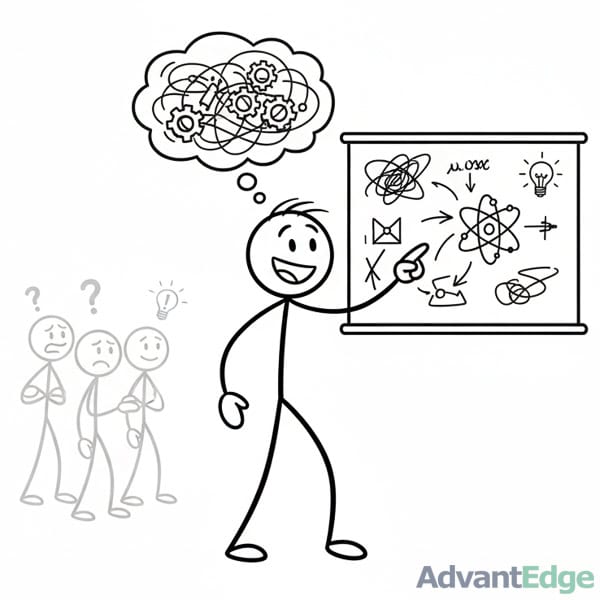
Quick-witted, curious, and clever, you enjoy mental sparring and exploring endless possibilities. You are the ultimate brainstormer, always seeking new challenges and concepts.

Quietly inspiring and deeply principled, you strive to make a profound, positive impact on the world. You combine deep empathy with a firm moral vision for the future.

Empathetic and idealistic, you seek harmony and have a strong inner moral compass. You are guided by your core values and desire to understand the human condition.

Warm and influential, you are motivated by helping others achieve their full potential. You easily connect with people and use your charisma to foster community and growth.

Enthusiastic and creative, you approach life as a vast canvas of emotional and social connections. You are a true free spirit who thrives on variety and genuine interaction.

Responsible, practical, and detail-oriented, you rely on logic, facts, and established rules. You are the reliable backbone, committed to upholding order and tradition.

Dedicated and warm, you are committed to protecting and supporting those you care about. You are meticulously organized and quietly ensure that needs are met.

Organized, grounded, and traditional, you excel at managing people and projects effectively. You are direct, results-driven, and focused on maintaining clear structures.

Popular and cooperative, you are highly attuned to the needs of others and the social order. You proactively create harmony and enjoy hosting and bringing people together.
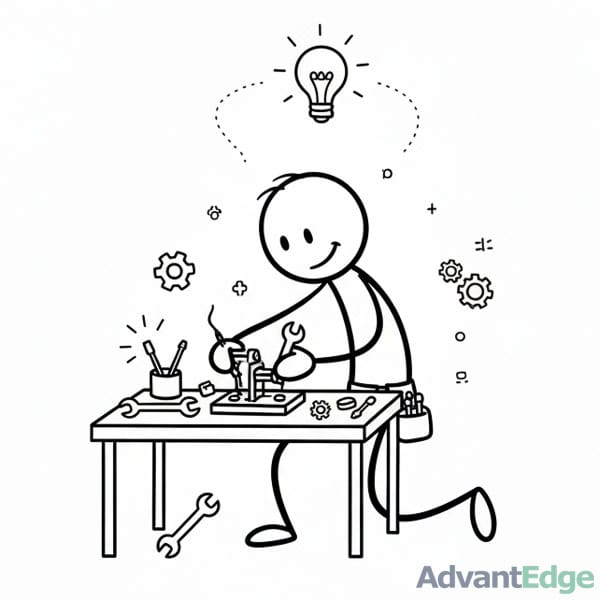
Bold and spontaneous, you learn best by doing and mastering mechanical skills. You are a calm observer until a problem arises, at which point you become a focused, skilled solver.

Gentle and free-spirited, you live in the moment and express yourself through action and art. You value sensory experiences and often possess a natural sense of aesthetic beauty.

Smart, perceptive, and action-oriented, you thrive on excitement and immediate results. You are a master negotiator and realist who focuses on the tangible present.

Spontaneous, fun-loving, and engaging, you bring joy and energy to your surroundings. You love being the center of attention and appreciate the finer things in life.


Warning: Undefined array key "paginate_all" in /home/klient.dhosting.pl/irbbak/advantedge.business-fee4/public_html/wp-content/plugins/hd-quiz/includes/functions.php on line 292
#1. After a long week, you feel most energized by…
Warning: Undefined array key "paginate_all" in /home/klient.dhosting.pl/irbbak/advantedge.business-fee4/public_html/wp-content/plugins/hd-quiz/includes/functions.php on line 292
#2. When in a team meeting, you tend to…
Warning: Undefined array key "paginate_all" in /home/klient.dhosting.pl/irbbak/advantedge.business-fee4/public_html/wp-content/plugins/hd-quiz/includes/functions.php on line 292
#3. You are faced with a new, complex challenge. You prefer to…
Warning: Undefined array key "paginate_all" in /home/klient.dhosting.pl/irbbak/advantedge.business-fee4/public_html/wp-content/plugins/hd-quiz/includes/functions.php on line 292
#4. When describing an event, you tend to…
Warning: Undefined array key "paginate_all" in /home/klient.dhosting.pl/irbbak/advantedge.business-fee4/public_html/wp-content/plugins/hd-quiz/includes/functions.php on line 292
#5. When making a decision, you prioritize…
Warning: Undefined array key "paginate_all" in /home/klient.dhosting.pl/irbbak/advantedge.business-fee4/public_html/wp-content/plugins/hd-quiz/includes/functions.php on line 292
#6. In a difficult situation, you believe it’s most important to…
Warning: Undefined array key "paginate_all" in /home/klient.dhosting.pl/irbbak/advantedge.business-fee4/public_html/wp-content/plugins/hd-quiz/includes/functions.php on line 292
#7. You typically prefer your work to be…
Warning: Undefined array key "paginate_all" in /home/klient.dhosting.pl/irbbak/advantedge.business-fee4/public_html/wp-content/plugins/hd-quiz/includes/functions.php on line 292
#8. Your approach to daily life is generally more…
Warning: Undefined array key "paginate_all" in /home/klient.dhosting.pl/irbbak/advantedge.business-fee4/public_html/wp-content/plugins/hd-quiz/includes/functions.php on line 292
#9. In a casual conversation, you typically…
Warning: Undefined array key "paginate_all" in /home/klient.dhosting.pl/irbbak/advantedge.business-fee4/public_html/wp-content/plugins/hd-quiz/includes/functions.php on line 292
#10. Before deciding on a major purchase, you primarily seek…
Warning: Undefined array key "paginate_all" in /home/klient.dhosting.pl/irbbak/advantedge.business-fee4/public_html/wp-content/plugins/hd-quiz/includes/functions.php on line 292
#11. When learning a new skill, you prefer…
Warning: Undefined array key "paginate_all" in /home/klient.dhosting.pl/irbbak/advantedge.business-fee4/public_html/wp-content/plugins/hd-quiz/includes/functions.php on line 292
#12. You are more likely to be captivated by…
Warning: Undefined array key "paginate_all" in /home/klient.dhosting.pl/irbbak/advantedge.business-fee4/public_html/wp-content/plugins/hd-quiz/includes/functions.php on line 292
#13. When giving constructive criticism to a colleague, you focus on…
Warning: Undefined array key "paginate_all" in /home/klient.dhosting.pl/irbbak/advantedge.business-fee4/public_html/wp-content/plugins/hd-quiz/includes/functions.php on line 292
#14. You find it easier to accept a decision if it is…
Warning: Undefined array key "paginate_all" in /home/klient.dhosting.pl/irbbak/advantedge.business-fee4/public_html/wp-content/plugins/hd-quiz/includes/functions.php on line 292
#15. For an upcoming holiday, you would likely be happiest with…
Warning: Undefined array key "paginate_all" in /home/klient.dhosting.pl/irbbak/advantedge.business-fee4/public_html/wp-content/plugins/hd-quiz/includes/functions.php on line 292
#16. You feel most comfortable when…
Compliance Notice & Liability Disclaimer
Please Read Carefully: This assessment is provided strictly for informational and educational purposes. The results generated are based on a simplified model and the automated scoring of the HD Quiz plugin.
This assessment is not an official, certified, or scientifically validated clinical instrument (such as the official MBTI® Step I or Step II). The results are not binding, should not be used for clinical diagnosis, and must be treated as a loose guide to spark further strategic analysis.